

Greetings, Fellow Adventurers,
It’s another Folklore Friday!
As you know every Friday, we’ll embark on a journey through ancient tales, hidden myths, and mysterious legends that make up the fantasy worlds. Folklore Fridays will dive into the stories that shape the heart of our epic adventures.
So grab your sword, light your lantern, and prepare to journey into realms of fantasy and lore. Who knows what we’ll uncover?
Feeling generous? ✨Want to support my work? ✨Consider donating a coffee to keep me energized and the creativity flowing.
Your contribution is greatly appreciated. 🙏
THIS WEEK: Spirit
Spirits whether as supernatural entities, personifications of nature, or echoes of the dead, hold a vital place in fantasy writing. They serve not just as imaginative elements that enrich world-building, but also as vehicles for exploring themes of life, death, morality, and the unseen forces that shape reality.
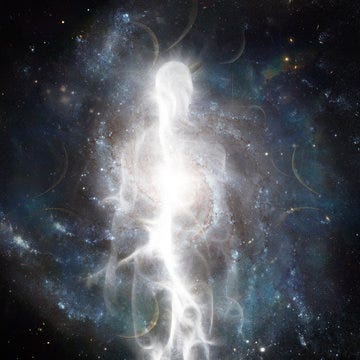
Spirits often form the backbone of a fantasy world's mythology. From elemental spirits tied to wind, fire, and water, to ancestral spirits guarding a tribe, these beings give a world depth and a sense of continuity. They often serve as intermediaries between the mortal and divine, and their presence can explain natural phenomena, magical systems, or the moral order of the universe.
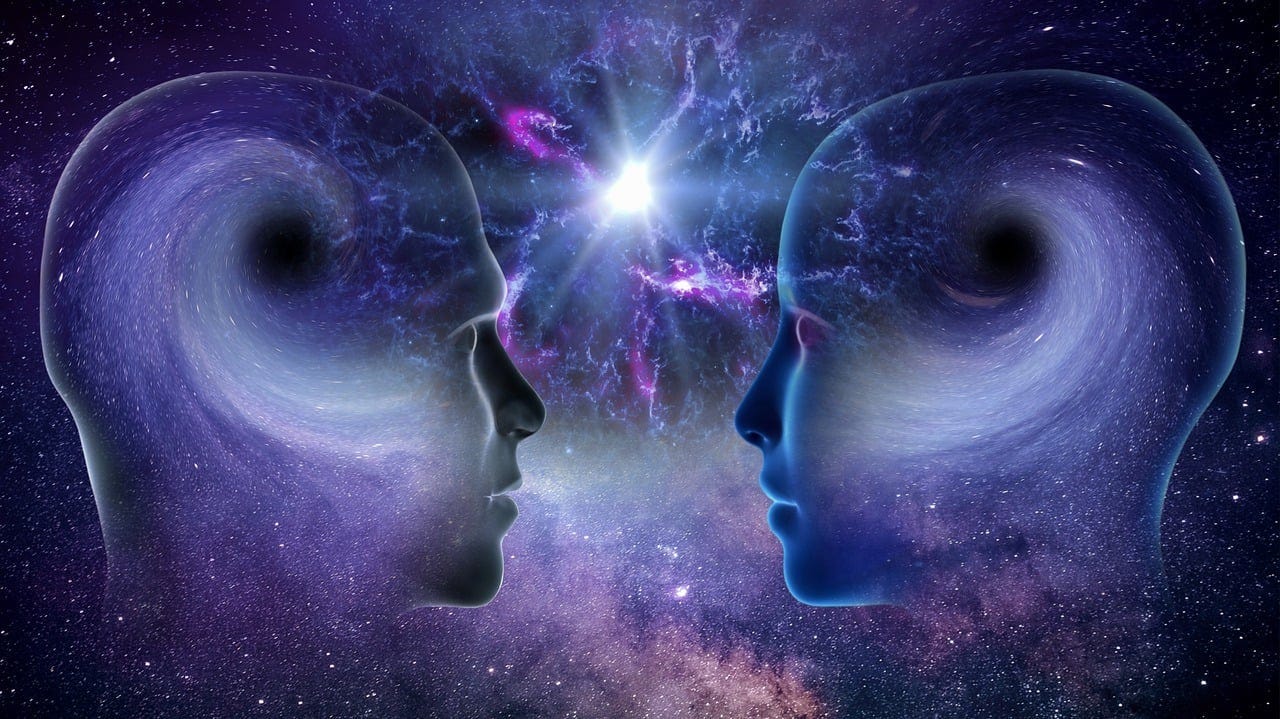
Let’s get philosophical for a moment: what is spirit in our world?
Hegel viewed it as our consciousness, both individual and collective, in Phenomenology of Spirit.
In many New Age philosophies, spirit is understood as the animating force of our being. The vital energy or essence that gives life and consciousness to the body.
Generally, spirit is considered a non-material essence. It has no form or mass, yet it is often associated with consciousness, morality, and the capacity for reason.
Some traditions link spirit closely with the soul or mind, using the terms interchangeably or placing them along a spectrum of immaterial aspects of the self.
Others see spirit as a connection to the divine or God, a bridge between us and the transcendent.
Nietzsche, however, had a different take. He saw spirit not as a separate or divine entity, but as something shaped by the body, an instrument of physical will and instinct. In “Thus Spoke Zarathustra”, he outlines the three phases of the spirit: The Camel, The Lion, and The Child
Each stage represents a transformation in the spirit’s journey toward true self-overcoming.
Descartes, on the other hand, believed the spirit was housed in the pineal gland, calling it “the seat of the soul.” He proposed that this tiny gland was the point of interaction between the immaterial mind and the physical body. It is a central idea in his theory of Cartesian dualism if you are interested.
This is just some of the things I have learned as a Philosophy student. Very interesting stuff. Above I am talking more about the human spirit or soul. Below we are going to explore Spirit in the more ghostly sense.
Let’s get back to Fantasy!
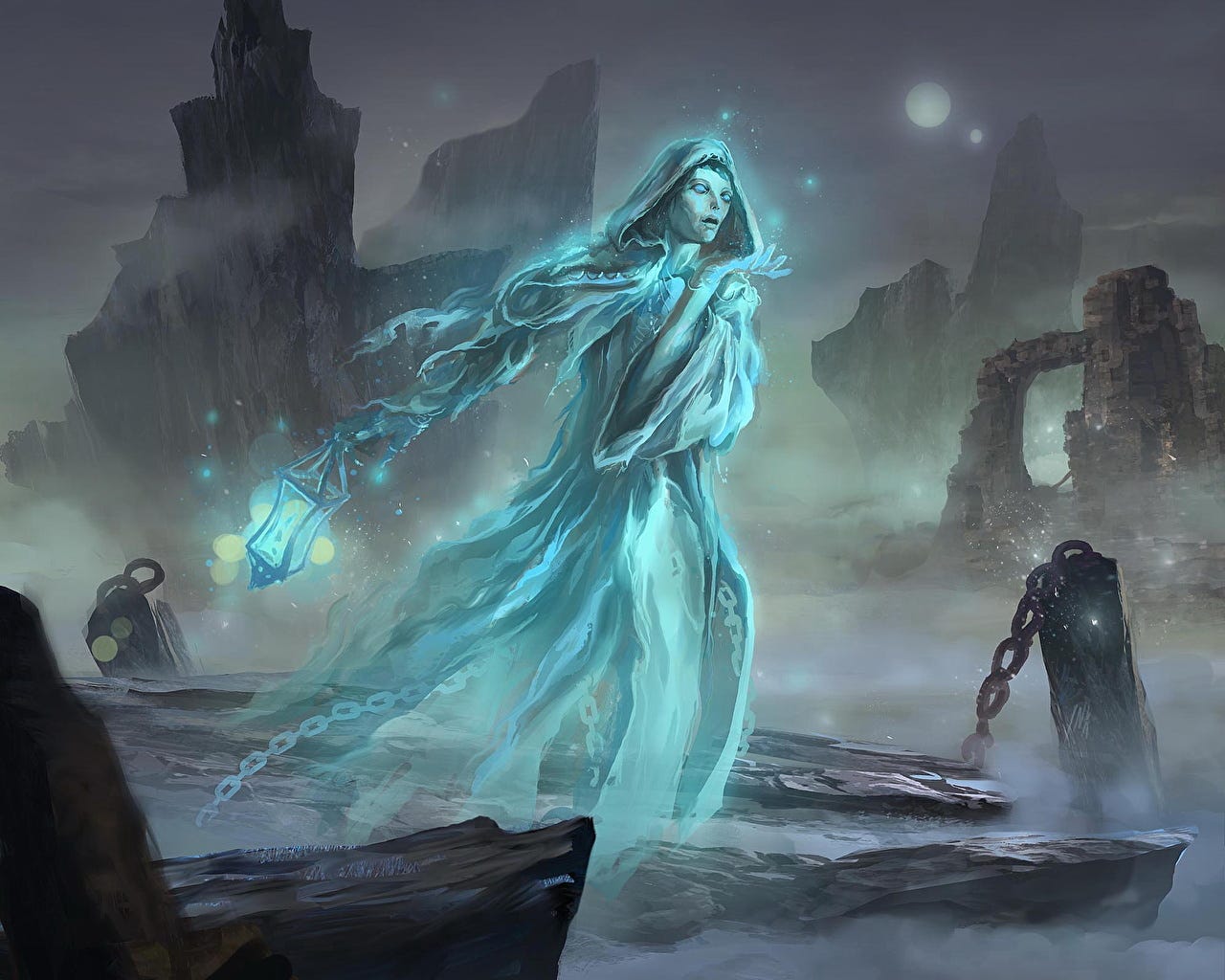
Spirits in fantasy writing are incredibly versatile and can serve a wide range of narrative, thematic, and worldbuilding functions. Here’s a breakdown of how you can use spirits in your fantasy story:
1. Guardians and Protectors✨
ex. Forest spirits (Dryads) protecting sacred groves or ancient trees.
These spirits might only reveal themselves to those they deem worthy, requiring the protagonist to prove respect, bravery, or purity of heart to gain their trust. They can be visualized as ethereal beings or as sentient embodiments of the land itself, perhaps they can manipulate flora, animals, or even weather.
2. Messengers✨
ex. Spirits carrying messages between gods and mortals.
Spirits as messengers are one of the oldest and most fascinating roles in mythology and fantasy. These spirits might serve as intermediaries between the mortal and divine realms. They could act as messengers for gods or ancestors delivering warnings or divine commands.
Some might be bird-like, resembling celestial ravens or doves, while others could be human-like but ethereal, glowing with divine energy.
3. Memories✨
ex. Ancestral spirits that retain the memories and wisdom of a people.
Spirits tied to memory can be fascinating elements of world-building. These spirits act as guardians of the knowledge, traditions, and history of their cultures or civilizations. They might be the ancestors of a specific bloodline or people, their souls imprinted with the deeds and wisdom of the past.
4. Sources of Magic✨
ex. Mages binding spirits for energy, guidance, or elemental control.
In many magical systems, spirits are the fundamental forces that mages and wizards manipulate to perform their spells. These spirits could represent the elements, nature, or even abstract concepts like time or fate.
5. Hauntings and Curses 👻
ex. Spirits lingering due to trauma, revenge, or unfinished business.
Spirits that are trapped due to unresolved emotional issues often serve as symbols of grief, regret, or anger. These spirits may haunt a location, person, or artifact, causing misfortune or sorrow. The haunted place could be a battlefield, a forgotten home, or a cursed artifact that still holds the echo of the spirit's rage or sorrow. These spirits may refuse to move on until their emotional wounds are healed or their unfinished business is resolved.
6. Spirit Companions or Familiars✨
ex. Your protagonist is bonded with a spirit animal or ancestral guide.
Spirit companions often represent aspects of the protagonist’s inner self. If the protagonist is brave, their companion might be a lion or eagle; if they are more cunning or stealthy, their companion might be a fox or owl. Sometimes these companions can even communicate with the protagonist, offering wisdom or emotional comfort, and they may grow in power as the protagonist’s abilities evolve.
7. Shapeshifters✨
ex. Trickster spirits that deceive, test, or mislead mortals.
Shapeshifting spirits add an element of mystery and uncertainty to the narrative. These spirits can take on multiple forms, sometimes blending seamlessly into the world around them, which makes them excellent deceivers and manipulators. Often, these spirits might not be malicious but simply enjoy testing or confusing mortals, pushing them to their limits.
Examples of Different Types of Spirits in Media:
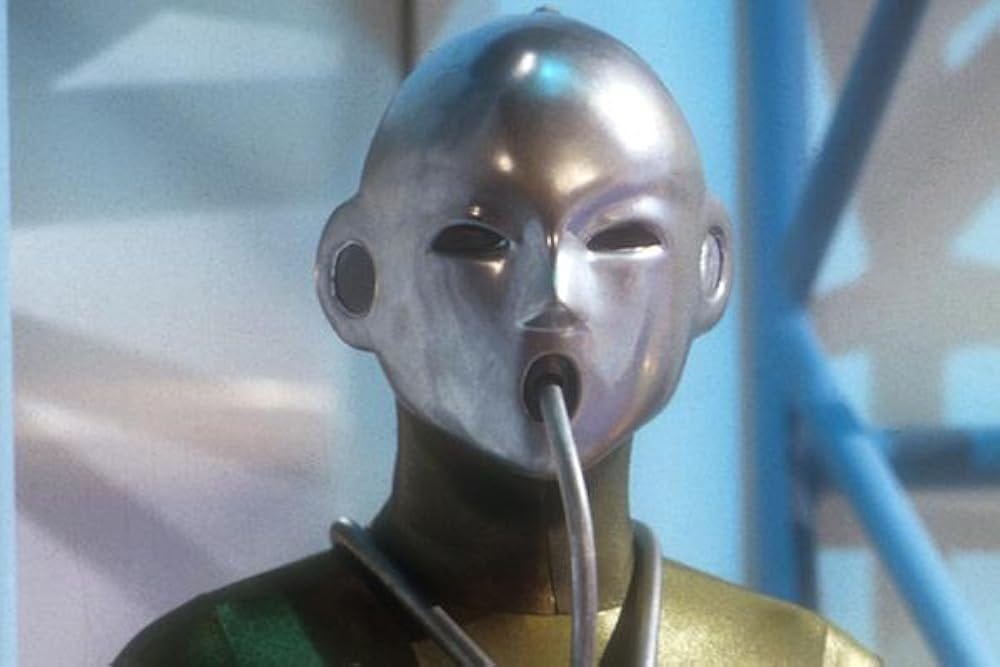
Here is Legion from Red Dwarf comprised of multiple consciousnesses. “I am Legion we are many.”
https://reddwarf.fandom.com/wiki/Legion
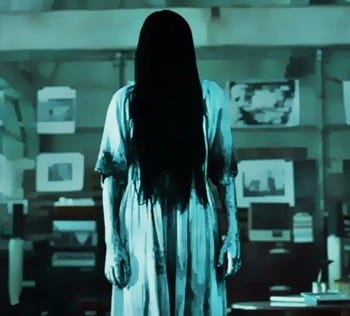
Samara Morgan a haunting ghost from her tragic unjust death.
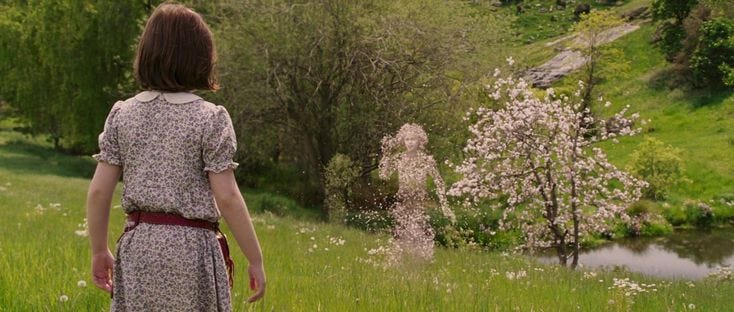
Dryad spirit from The Chronicles of Narnia
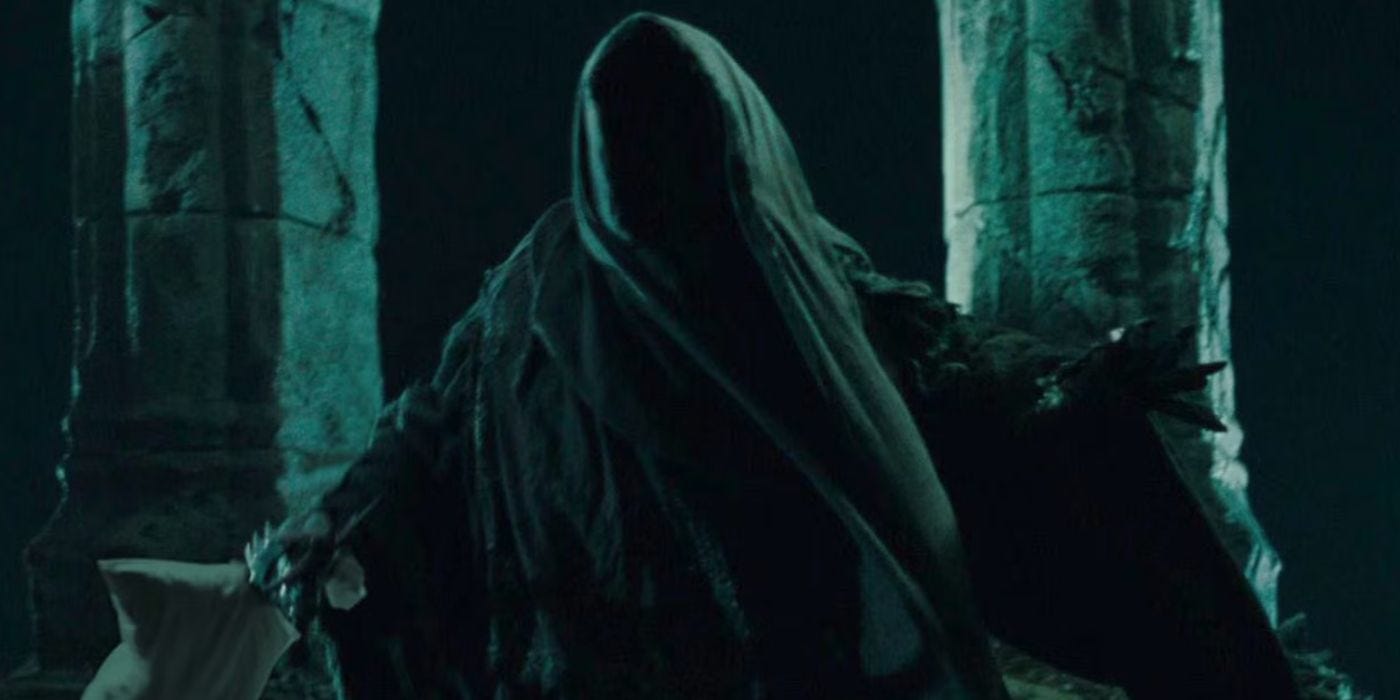
Nazgul’s are hunters/servants to find the owner of the One Ring. They are wraiths or corrupted spirits.
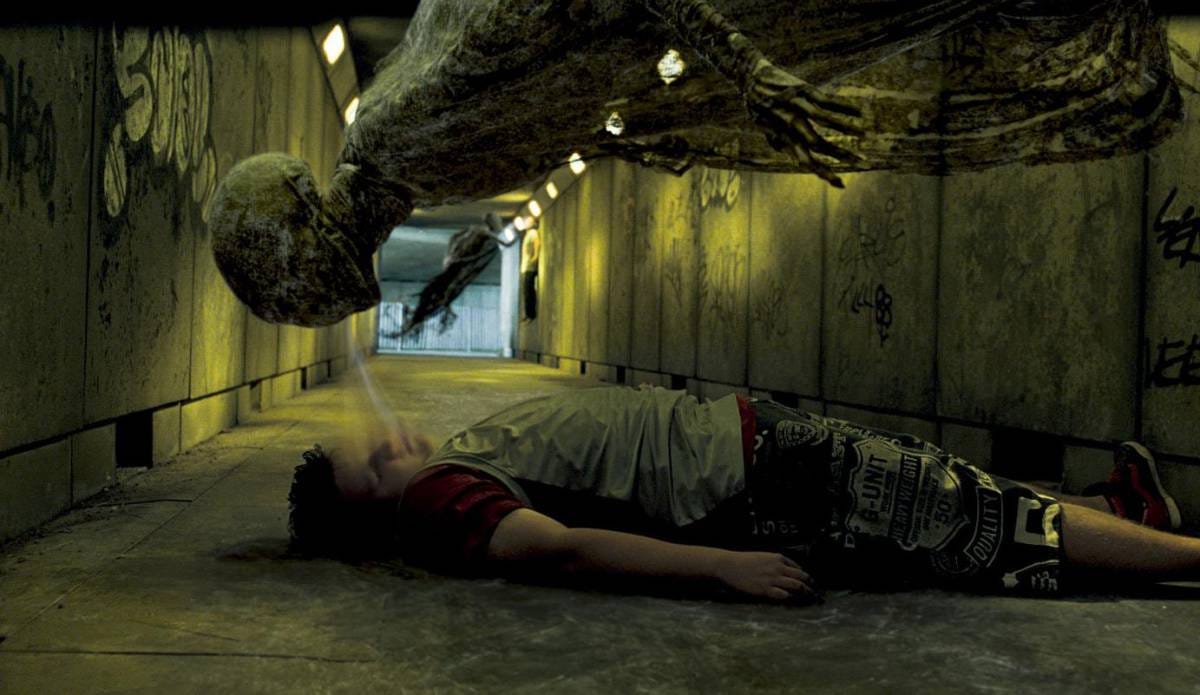
Dementors in Harry Potter, another example of a wraith or corrupted spirit.
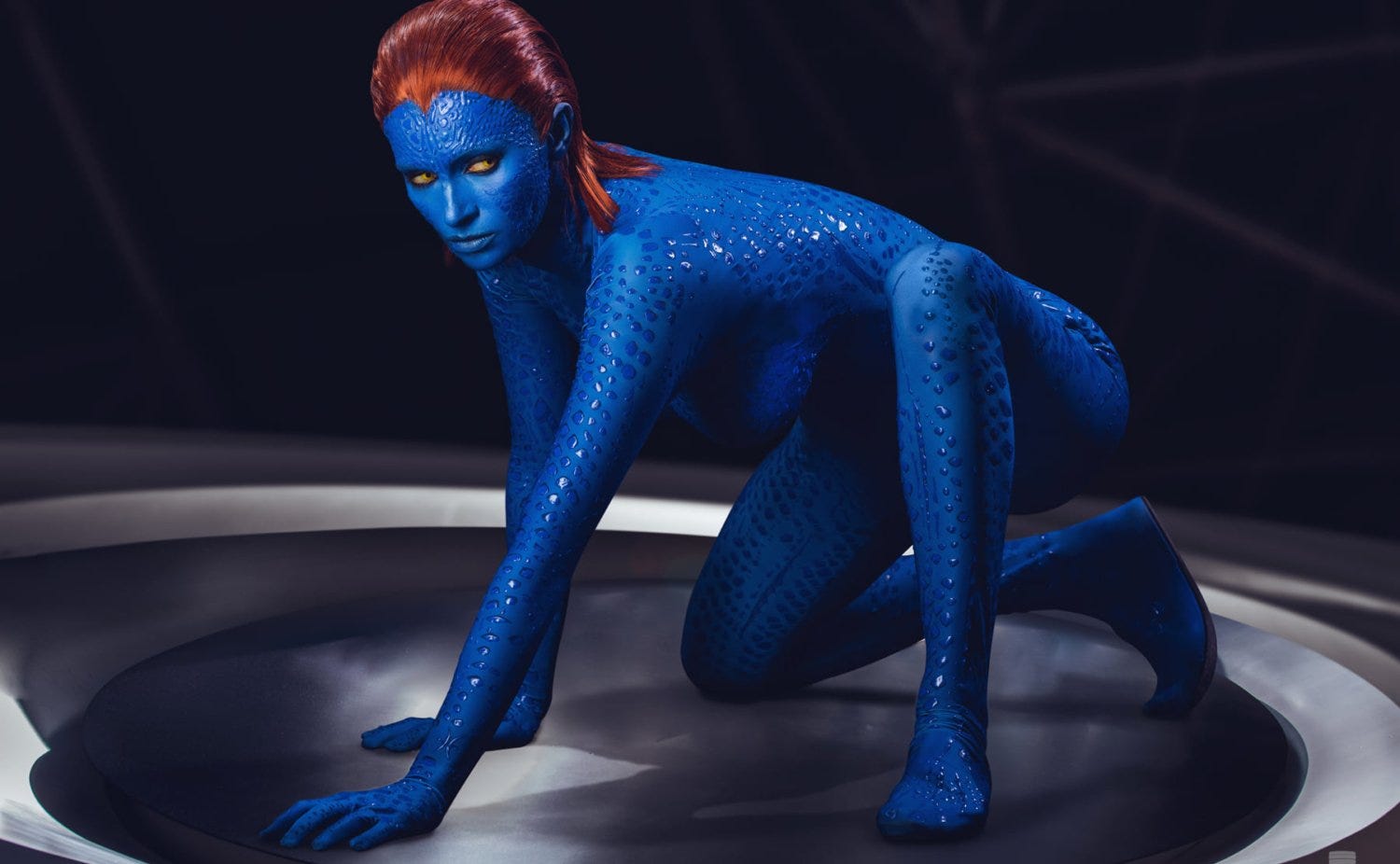
Mystique, from X-Men. Although she is not a spirit she is a good example of a shapeshifter. If you want an example of a shapeshifter spirit we can think of The Genie from Aladdin.
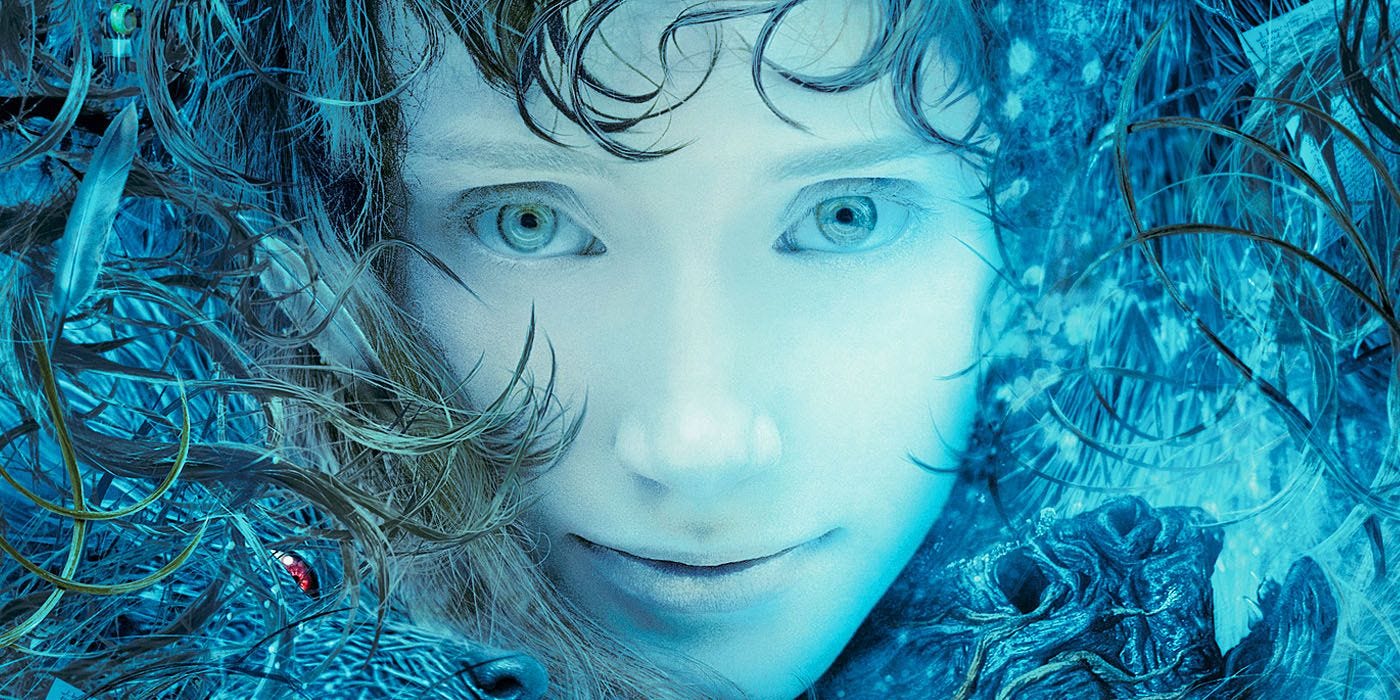
Lady in the Water, Water Nymph
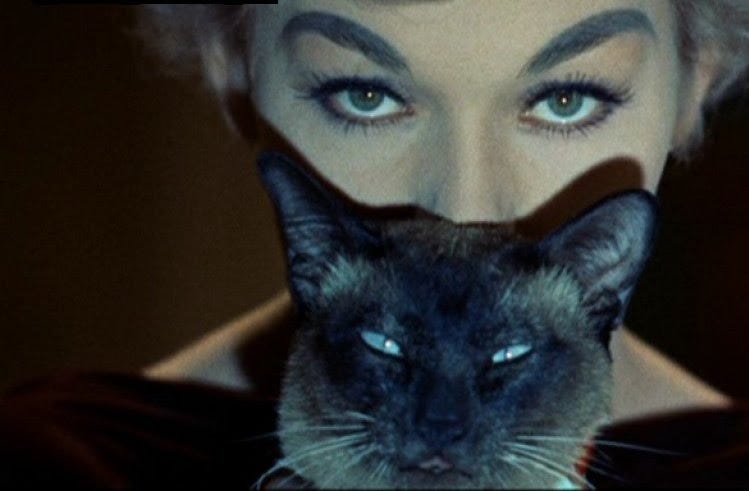
Bell, Book and Candle, cat familiar Pyewacket casts a love spell for the protagonist.
Are you enjoying Folklore Fridays? Any tips are greatly appreciated and help me continue to create and share more content like this. Thank you so much for your generosity and encouragement! 🙏❤️

Final Thoughts:
Incorporating spirits into your fantasy writing offers an incredibly rich toolset for deepening your world-building, enhancing character development, and exploring profound themes. Whether you’re crafting guardians who protect sacred lands, tricksters who challenge your protagonist’s wisdom, or ancestral spirits offering guidance, spirits can serve as mirrors to the inner struggles and growth of your characters.
Ultimately, spirits in fantasy are powerful vehicles for themes like balance, sacrifice, justice, and the unknown. They can make your world feel alive with a depth that goes beyond physical landscapes. When done thoughtfully, they can leave your readers with a sense of wonder and contemplation, knowing that there’s always more lurking in the spaces between the known and the unknowable.
When weaving spirits into your narrative, ask yourself: How do they shape your characters’ journeys? What hidden truths do they reveal? What cost must your characters pay for their power or knowledge? The answers will drive the heart of your story forward.
I loved this. What a great article, Nova, thank you! Spirits play a large part in the Awen Universe, first in the trilogy and now in the spinoff series. Animal Elders hold the Awen’s memories and powers as well as those of the Druid people. Druid masters slip in out of other beings bodies, and remain long after their physical body dies. Two of the MCs of the spinoff are currently hosting such Druids. And another important character is the ghost of a GBI agent killed in the line of duty. He can’t/won’t go on to the Otherworld until he sees justice for the kids and street people who keep disappearing. So you can see why I ❤️this so much.
Did you ever read Terry Brooks’s Magic Kingdom for Sale/Sold? I read that series years ago and it stayed with me. His earth and animal characters in a magical world within the “normal” world opened up so many possibilities. And I totally relate to Willow, a sylph who must transform into a willow tree every 21 days to maintain her life force. Anyway, didn’t mean to write a whole post here. But see how you inspired me?! Thanks for that!🩷